Thursday, 10 December 2015

Odd Even Cars and Captain Planet

Hearing the objection and nod of disapproval from numerous people to Delhi Government’s odd-even car proposal, has made me realize how unconnected and unconcerned most of us are with the environment and the most basic and necessary of things which is required for our survival- AIR.

Living in Delhi has been equated to living in a gas chamber by the High Court of Delhi. Our air pollution levels are off the charts. 

Runners and cyclists are inhaling several times more of the air pollutants. This is not a city where running, cycling, walking or living is feasible anymore. Yet, many of us are trying to shoot down the Delhi Government’s much needed initiative of even-odd cars or arguments from the supporters of the proposed rule.

Maybe the reason for that is that the people of Delhi cannot connect the relationship between clean air and healthy living. However, runners and cyclists in Delhi and elsewhere are more aware of the menace of bad air and they also seem to be more proactive and receptive to the even-odd rule. 

It seems that the non-athlete sedentary Delhi-ite has not yet been able to fathom how bad the situation is and how much worse it will become if no action is taken immediately and if actions which are being undertaken are thwarted for flimsy reasons.

The regular Delhi person seems to be content with the, if I can’t see it then it’s not bad or if I close my eyes, then the monster will vanish approach. Forget the obliviousness and apathy of adults; our children’s lungs are already compromised and will further deteriorate.

Remember the superhero, Captain Planet. Nope? Or do you remember him only faintly? Don’t fret. I can understand. He is one of the most basic superheroes. He, (i) is not good looking; (ii) is not overly muscular; (iii) has no background childhood horror stories or tough upbringing or emotional issues that you can relate to; (iv) has no over the top superpowers; and (v) he is in general a very amiable character.

Due to all these “shortcomings” which don’t give him an "edge", Captain Planet never became as famous as Superman or Batman. Hell, even Ant Man is now more famous than him. Captain Planet is like the guy in class that you would say Hi to everyday but will conveniently forget when you graduate. 

But unlike Batman and Superman and other superheroes he was possibly the only one who wanted to save our planet from pollution with the help of the people. His superpower in fact generated when all the kids combined their powers. He was basically a lesson from his creator/writer that we need to get together and save the planet.  Captain Planet was the only superhero who told us to protect our environment and not pollute it at the end of every episode.

His theme song was:

Earth!
Fire!
Wind!
Water!
Heart!

GO PLANET!

With your powers combined I am Captain Planet!

Captain Planet, he's our hero,
Gonna take pollution down to zero,
He's our powers magnified,
And he's fighting on the planet side

Captain Planet, he's our hero,
Gonna take pollution down to zero,
Gonna help him put us under,
Bad guys who like to loot and plunder

"You'll pay for this Captain Planet!"

We're the planeteers,
You can be one too!
'Cause saving our planet is the thing to do,
Looting and polluting is not the way,
Hear what Captain Planet has to say:

"THE POWER IS YOURS!!"

Nice guys never win
Captain Planet was quite possibly the only superhero who wanted to really add value to our life and save us and the future generations from the menace of pollution created by humans. He was an animated lesson in environment protection.

However, just like we ignored him since it was convenient, we are ignoring the Delhi Government’s initiative and the benefits of the odd-even car rule since it will not be convenient to follow the said rule.

All the objections that I have heard till now can be dealt with.

Last mile connectivity at work place is absent is not a correct statement. There may be less connectivity but there cannot be an absence. A commercial establishment will never be set up in the middle of a desert. No profits can be made if a business is run in the middle of nowhere. If not taxis, buses or rickshaws, then there will be some local “entrepreneur” who will be running an auto service. Maybe you could give walking a shot! Your employer in order to protect his profits will ensure that some sort of transport is provided. Your colleagues can come and pick you up on bad days or till the time arrangements are made.

What will happen in case of a medical emergency? I trust you will agree that no cop will stop a car if he can see a patient in pain inside. Moreover, ambulances will move faster if there are less cars on the roads.

People are leading normal lives in smaller cities and villages where transport is negligible. Even with the odd-even car rule, we will still have a hundred times more connectivity and transport facilities.

For every objection there is some rational explanation, solution or alternative. The only problem is that it is inconvenient. The government is figuring out solutions to loopholes and they are devising ways to control any chaos that may arise from the rule. But shooting down a policy that allows you, your family and future generations to live a healthy life is not humane or rational, just because it will inconvenience you and just because you do not (at this point in time) realize the importance of clean air.

I’m not even venturing into the fact that less traffic on the road will mean substantial time savings which can be used to lead a happier and less stressed life. 

I'd use the extra time, low traffic and clean air to rigorously pursue outdoor activities. I wish there were more cyclists and runners in Delhi. They would have been able to influence those who do not realize.

Read this http://www.firstpost.com/india/india-races-past-china-in-pollution-delhi-air-one-and-a-half-times-worse-than-beijing-2540114.html for another reminder of how dire the situation has become.


Friday, 4 December 2015

Curiosity

Humans are extremely curious by nature. 

I'm not just talking about science and experiments. We spend a ridiculous amount of time in knowing and learning about things that we will never even put to use or we repeat actions even if they lead to failure, with the hope that there will be one successful result.

We like to know about the top speed of our cars. We want to know the top speed of our neighbour's car. We make sure that we know how many seats are in the President's air plane. 

A child dismantles and thereby destroys his toys, simply to know what is inside. Our astronauts wanted to know what is beyond earth even before they could conclusively determine what use the beyond would serve us, and off they went.

We've created social media to know "everything". We create world records, just to see if it can be done.


Our morbid curiosity, makes us stop or slow down next to car accidents, not to help the victims or alleviate the arguments between the drivers, but just to know what happened and then off we go.

We watch videos on YouTube and then keep clicking on the suggested videos and after one hour we regret the time wasted since nothing concrete was achieved. That one hour was just curiosity tricking you with the hope of finding something.

Running, I understand is another form of satisfying our curiosity. You ran a PR/PB in a race so the next thought is to see if you can beat it. Can I go faster?. You ran a 50 km ultra and after finishing you'd like to see if in the next race, you could run longer, maybe 75 kms.

Just like in science where the curiosity of scientists is leading to developments, the curiosity of athletes and amateur athletes is pushing the boundary of sports.

This I believe is the reason for people running and training harder, year after year. 

Recently, I saw a few posts on Faceboook after the conclusion of Airtel Delhi Half Marathon and many runners asked a rhetorical question; should I go for a faster time next year?.

We know that the body came with an expiry date plus age progression related slowness. It is almost our duty to see what we can do with it before we no longer exist or before we are unable to exercise. How fast can we go? How long can we go? 

The curiosity is creating better athletes and pushing the limits and it does not make any sense to not be curious when it comes to your own backyard experiment- training and racing.


Wednesday, 2 December 2015

Racing and its purity


Racing is the purest form of running.

A runner never starts racing to win money, accolades, admiration or external emotional support.

A runner starts racing for purely selfish reasons; a desire to be faster; a desire to be better. 

Racing see-saws on a desire to prove to oneself that there are no limits. Anything is possible and that time only moves forward.


This selfishness and self-centeredness of racing is in fact its purity. All racers don’t win and become famous, yet they end up racing even as losers (even constant losers race).

Pacing, charitable runs, coaching, organising races, writing about running, selling running etc., all have one thing in common- vested interests.

A pacer in a race is simply seeking social admiration and accolades.

A coach who trains you for running is there to merely engage in business through the sport.

A race organiser is merely a middleman between the sport and the participant.

Charitable runners are not connected to the running. It is just a means to an end (the charitable cause) which is unrelated to the sport or the charitable runner is seeking admiration.

Writing about running is not the act of running and therefore the dissociation from racing is omnipresent.

A person who is selling running (or running products) to you is simply a salesman of a product with remote or negligible connections to the product/sport.

A racer on the other hand is a pure imbecile. He just yearns to improve and compete, even if that means that there is an absence of money, social admiration and accolades. His fervour and his desire are to simply become a better version of himself and defeat the others. Be more, try more, be even more, keep trying for more.

The selfishness is a gateway to the purity. The agenda is crystal clear; constant improvement. The purpose is clear; it is for myself.


Sunday, 22 November 2015

How to train for a run with elevation when you have no access to hills

You live in Delhi and now you want to run a race like Garhwal Runs, La Ultra or Comrades, where the race route has a significant amount of elevation or for that matter, even shorter ultra races in Delhi NCR such as Bhati Lakes Ultra or Serco Trail-a-Thon where the overall elevation gains during the race route are several times more than your regular training runs on Delhi roads or similar "flat lands". 

Congratulations, you have chosen an endeavour which is as complex as finding a fat free yet delicious aloo paratha.

Just to give you an estimate, the elevation gains for some of the runs mentioned above, which I have run, are as follows:

About 275m for Bhati Lakes 50k Ultra


About 320m for Serco Trail a Thon 56k Ultra

About 2500m for Garhwal Runs 76k Ultra
If you do all your long runs on Delhi NCR roads or any other city's roads which have negligible elevation, you will suffer horribly during these races if you try to maintain your regular flat land pace. Why? Because, your legs are simply not used to the elevation.

I have been there and done that. I ran all of the above races with negligible elevation training. Most of my training was limited to Sanjay Van which isn't even close to the real race conditions. It becomes quite unpleasant to tackle a challenge when you don't even know how the challenge feels.

If you see the images above then, it is apparent how I went from a 6:00 min/km pace at Bhati 50k Ultra to more than 8:00 min/km pace at Garhwal Runs 76k Ultra, when the elevation increased ten times. I basically walked the second part of Garhwal Runs because my legs had packed their bags and bid farewell by the time I had reached the 50th km mark.

Now, to suffer less and perform decently during such races, you have two options- First Option is to keep training on flat land and on race day, simply reduce your overall pace to a more realistic 'elevation adjusted race pace', which basically means either running slow overall or walking on the inclines and running on the down hills to save energy. Second Option is to train for the elevation as much as possible and try to perform at the race, rather than just hobbling to the finish line.

If your plan is to follow the First Option, then read no further. On race day, just run slower overall or walk the inclines and run the down hills and you'll be in a respectable condition when you finish and you will suffer less during the race.

If your plan is to follow the Second Option, then there are a few methods to train for the elevation. These methods are as follows:
  1. Move to the mountains- Quit your job, divorce your wife/husband, disown the kids, say goodbye to the parents and leave Delhi or the similar flat land where you reside and move to the mountains in order to, (i) train for the race; (ii) learn the art of shunning grown up responsibilities; and (iii) become a hill running machine. You will do well in the races but don't look at me for advice on what to do with yourself when the race is over and you miss the ex-family. You got a PB and you maybe even podium-ed! That is the most important thing in life, according to many "bro scientists". Obviously, this is the most impractical option but the most result oriented.
  2. Use Delhi's lumps and humps- Go to places like Sanjay Van, Kamla Nehru Ridge, Aruna Asaf Ali Road, your building staircase etc., where the elevation is more than your regular running route. You obviously won't get the training benefits of proper hill running but at least your legs will be ready for about 20% of the race day elevation brutality. This is not a foolproof method since the elevation in all these places where you will train is momentary and then there is a downhill, whereas on race day the elevation will be substantially continuous and plentiful.
  3. Create a mountain out of a molehill (treadmill)- Go to the gym, set the treadmill to the required incline and train on it. Voila! You are now officially a demigod because you have created a hill; you can bask in the glory and then be ready for the pain of the workout. To use treadmills properly for race training, do the maths and figure out the elevation gain and the distance numbers that are required for a particular race. Eg: If your race has a 300 metre elevation gain, then you could get the required elevation gain training during a 5k run on the treadmill by setting the treadmill to 6% incline. It sounds easy but it isn't since it will actually mimic running up a continuous hill. It is an effective method to train for elevation, provided that you can afford a treadmill at home or a swanky gym which allows you to spend an unnatural amount of time on the treadmill. I go to a Haryanvi owned and operated gym and when I asked the owner if I could spend some quality time on the treadmill (beyond the gym's 20 minute policy), he asked me to pay thrice the monthly fee for this "add on service". I thanked him for his generous offer but mentally flipped him the bird and went home.

Thursday, 19 November 2015

Minimalism of Running

All of us in some way or the other and at some level, understand that wanting and desiring more material objects is a never ending and vicious cycle. The cycle never ends and no one ever goes six feet under with contentment and smugness of having amassed all that could be possibly amassed.

Minimalism is a concept which has been in existence ever since mankind realized and understood the deleterious effect of excesses and the benefits of simplicity and meagreness.

Minimalism is simply a guiding star to be followed in order to allow yourself to synchronize your possessions with your real needs. Procuring bigger, shinier, more expensive or simply more of objects is ultimately unnecessary physical and mental clutter.

The short term happiness of amassing outweighs the long term costs of hauling those possessions with you. It is like a mule which is being constantly being loaded and eventually its legs will buckle.

Running is an everyday lesson in Minimalism. It is the simplest of sports which requires the least amount of equipment and clothing. It cannot be practiced while indulging in excesses.

To run with the least effort; body weight has to be minimal; food intake has to be limited; clothes have to be minimal; shoes have to be minimal. Don’t mistake minimal shoes for the minimalistic shoe trend since here the pair of shoes in question is any pair of shoes which is suitable for running; we wouldn’t run a marathon in combat boots.

Even during a race- body movement, breathing, calorie intake and hydration has to be minimal and just right- no less, no more. Excess in any of these race facets can jeopardize a race or hamper performance.

During training we practice the least required- vertical movement of legs, arm swing and neck movement. The idea behind this is to conserve as much energy as possible i.e. to be as minimalistic as possible.


One of the primary reasons for running races is the desire and goal to reduce your previous timing. This constant endeavor to shave of minutes and seconds is an extension of Minimalism. Minimizing timing is directly related to how much you have minimized your body and the running gear adorning it. Even negative self talk during a race has to be minimized in order to maximize the results.

Companies are selling running gear which are designed to be the smallest and lightest possible, yet strong and reliable since minimalistic is the requirement of a runner and that is what takes him further and beyond.

Maybe the minimalist shoe trend was more of an emotional rather than scientific path.

Knowing fully well about, and after continuously practicing the basic tenet of Minimalism in running, we end up forgetting it when we stop running.

Other than the general tendency that we practice in life to amass objects, if we talk about running specifically, then there is a mad craze to hoard equipment, event t-shirts, running gear and finisher medals. People scrimmage for free event t-shirts and free food at events. It is simply contradictory to the simplicity of the sport of running.

I admire with envy some of the runners who have just a couple of pairs of shorts, singlets and shoes because I know that their running is clearer and more purposeful. Their running is not motivated by possession. They do not require the temporary motivation of a new wardrobe or equipment or a finisher medal in order to step out and run. I can imagine such a runner opening his wardrobe and pick up his minimal attire. There is no chaos of possession and usage allotment; there is complete purpose.

In fact, I would dare to imagine that a minimal wardrobe would increase the training regularity since the effort in maintaining its cleanliness and usability would connect a runner more with himself and his running.

I hark back to my regimen which was supplemented in summers by just two singlets, two shorts, one pair of shoes and a watch. It felt spartan, clean, tidy and purposeful. It used to be bare and strong with the only motivation coming from the anticipated effort and the results.

I look at my running wardrobe now and there is confusion. Event t-shirts that I don’t need, and apparel which I have never used and never intend to use. Fortunately, I don’t have medals since I either don’t take them, or I throw them away, or I give them to my niece to bang and bash.

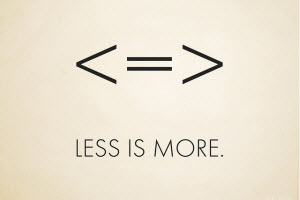
I’ll put the house in order soon. Less is more. 

Sunday, 15 November 2015

The best exercise to cure and prevent Shin Splints

Unless you're running by the book and have the patience of a saint, every runner has, is or will battle shin splints (medial tibial stress syndrome).

Medial Tibial Stress Syndrome is like the asshole ninja of injuries. It creeps up and stabs you when you least expect it and usually at the wrong time; near the peak of your training or race date.

I have suffered through a few instances of shin splints but I have managed to recover and salvage my training and races with one simple yet supremely effective exercise. 

Shin Splint

The exercise is so simple that sometimes, it becomes hard to believe that I did not know of this earlier and that I did not make it a part of my regular strength routine. And just to test its mettle, I have recommended this exercise to several of my disheartened and injured running buddies with the promise that they will be trotting along within 4-10 days if they follow the exercise routine religiously. Guess what happened when they followed the exercise routine? All of them were back on their feet!

I promise you that you will not need a doctor and medical examinations/tests or any fancy exercises or equipment to prevent or cure shin splints.

And this exercise is not limited for runners who are already suffering from shin splints; the exercise can and should be done by every runner because prevention is better than cure. 

There is a simple test to know how tender and weak your shin is: sit on a chair and bring up your shin and press it with two fingers; if it hurts or feels tender then your shin is in trouble and you should start the exercise immediately.

Without further ado, the exercise and the way to perform it are in the link below. If you get healed then thank me in the comments and if you don't then perform the exercise for a few more days and then thank me.

Wednesday, 4 November 2015

Guilt

I feel guilty for running sometimes. Naah, I'll be honest, many a times!

I feel guilty that I have the money to pay race fees, buy gear, a GPS watch, travel to race venues, when there are some who would have rather prioritized to spend that money on purchasing food and clothes.

I feel the deviance when I consume copious amounts of food when a sedentary person would have sufficed in half of that.

I feel the guilt while driving to a trail or a park which is several miles away from my house when there are many who walk, cycle or take a bus to reach work.

I feel like stopping my run when I see a person in a wheel chair or a person with a physical deformity, who I know for certain, cannot run even if he tries. I try to slow down and avoid eye contact when I pass by them or when our paths converge. Yep, I can't handle that, since it seems so unfair.


It feels horrible to know of a friend who has broken some bone or torn a ligament and has been advised to not indulge in running, while I have the unbridled freedom to frolic around.

It feels unnatural to realise that I deliberately injure myself by running and then use precious time and resources to heal, only to repeat this cycle with no intention of stopping.

Running feels tremendously good but I have guilt when I remember that I am doing this for sheer pleasure and I have the time, in seconds, in minutes, in hours, in days, even years, to pursue something so inconsequential in the long run, when there are some who, by circumstance, would have been forced to use this time to earn their living or some so virtuous, who would have done something great for humanity.

I know that in the end I will not have created something useful or utilitarian by my meaningless jaunts. The pitter patter from my feet just feels good to me and that is all there is. That is the truth! It feels decadent. It feels so empty, yet so necessary for my well being. What would I rather do with my spare time? I try to will a good response, but I can't force a different answer.

Sometimes, I feel guilty that my parents couldn't indulge in running because they were busy in raising me. Would they have liked it as much as I do? Maybe. I believe, my mother certainly would have.

Recently I came across this poem by Jack Gilbert and it unravelled some of my thoughts, which are still not clear but are certainly less muddled.

A Brief For The Defense
Sorrow everywhere. Slaughter everywhere. If babies
are not starving someplace, they are starving
somewhere else. With flies in their nostrils.
But we enjoy our lives because that’s what God wants.
Otherwise the mornings before summer dawn would not
be made so fine. The Bengal tiger would not
be fashioned so miraculously well. The poor women
at the fountain are laughing together between
the suffering they have known and the awfulness
in their future, smiling and laughing while somebody
in the village is very sick. There is laughter
every day in the terrible streets of Calcutta,
and the women laugh in the cages of Bombay.
If we deny our happiness, resist our satisfaction,
we lessen the importance of their deprivation.
We must risk delight. We can do without pleasure,
but not delight. Not enjoyment. We must have
the stubbornness to accept our gladness in the ruthless
furnace of this world. To make injustice the only
measure of our attention is to praise the Devil.
If the locomotive of the Lord runs us down,
we should give thanks that the end had magnitude.
We must admit there will be music despite everything.
We stand at the prow again of a small ship
anchored late at night in the tiny port
looking over to the sleeping island: the waterfront
is three shuttered cafés and one naked light burning.
To hear the faint sound of oars in the silence as a rowboat
comes slowly out and then goes back is truly worth
all the years of sorrow that are to come.
                                                                 - Jack Gilbert


The poem seems to be a manifesto for selfishness but the other view is uneasy to digest and makes it difficult to continue with this indulgence.